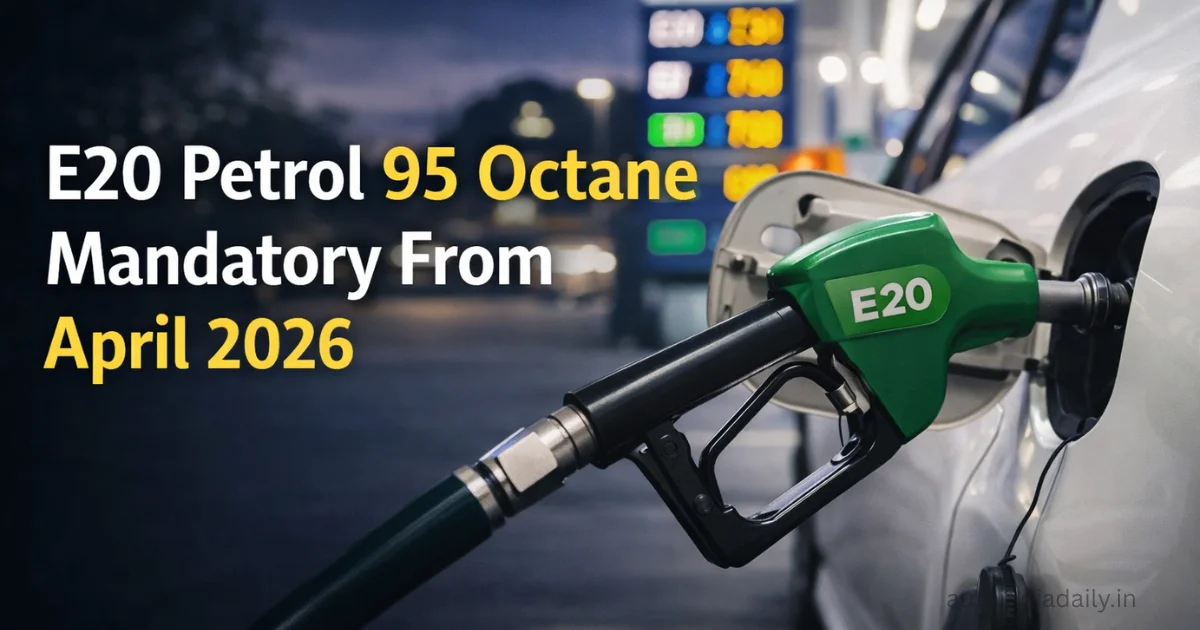
E20 Petrol 95 Octane: India’s fuel landscape is set for another major shift. From April 1, 2026, petrol sold across the country with a 20 percent ethanol blend (E20) will be required to meet a minimum octane rating of 95 RON. The move comes a year after the nationwide rollout of E20 fuel and represents the next step in the government’s ethanol-blending programme.
Here’s a simple breakdown of what this change means for car and two-wheeler owners, as well as the broader auto industry.
Also Read: 2026 Skoda Kushaq Production Starts: Deliveries From March- Key Details
What Is Changing From April 2026?
Regular petrol in India traditionally had an octane rating of around 91–92 RON. Under the new rule, E20 fuel must now meet a minimum of 95 RON.
This requirement will be implemented nationwide, although the government may allow oil companies to temporarily supply fuel meeting only the RON specification in certain regions or under specific conditions.
To ensure uniform quality, the fuel will also be standardised under Bureau of Indian Standards (BIS) norms.
Why E20 Petrol Has Higher Octane
Ethanol itself has a naturally high octane rating of about 108 RON. When blended with petrol at a 20 percent ratio, it increases the overall octane level of the fuel.
Oil companies estimate that E20 blending raises the octane rating by roughly 6 points. This means that fuel which previously measured 91–92 RON could now effectively reach 97–98 RON when blended properly.
Higher octane fuel helps engines resist knocking (premature combustion), which can improve efficiency and protect engine components.
The Bigger Goal: Reducing Oil Imports
The ethanol-blending programme is part of India’s long-term strategy to reduce dependence on imported crude oil.
Ethanol is produced domestically from crops such as sugarcane, maize and other agricultural sources. Increasing ethanol usage:
- Lowers foreign exchange outflow on fuel imports
- Supports farmers by creating additional demand for agricultural produce
- Helps reduce tailpipe emissions compared to pure petrol
For the government, the 95 RON mandate is aimed at improving fuel performance while scaling up ethanol adoption.
What This Means For Car And Two-Wheeler Owners

For most new vehicles, especially those manufactured after 2023–24, there is little cause for concern. Many modern cars and motorcycles are already E20-compatible or have been updated to run safely on ethanol-blended fuel.
In fact, the higher octane rating could be beneficial, as engines may run smoother and experience less knocking.
However, older vehicles may need extra attention. Ethanol has different chemical properties compared to petrol:
- It can absorb moisture from the air (hygroscopic nature)
- It may affect rubber seals, fuel lines or metal components in older fuel systems
- Long-term storage with E20 fuel may lead to fuel degradation
To address compatibility issues, some manufacturers and aftermarket suppliers have already introduced E20 conversion kits for older models.
Importance of Fuel Quality Control
One of the key concerns around ethanol blending has been fuel contamination. Poor blending practices or moisture entry can cause performance issues, especially in fuel-injected engines.
The introduction of BIS standardisation aims to address this. With stricter quality checks during blending and distribution, the risk of contaminated or inconsistent fuel should be reduced across the country.
For vehicle owners, this means more predictable fuel quality regardless of location.
Impact On The Auto Industry
The move reinforces the industry’s ongoing transition toward flex-fuel compatibility. Manufacturers are already:
- Updating engines and fuel systems for E20 use
- Testing materials for ethanol resistance
- Recalibrating engines to maintain performance and efficiency
In the long term, higher-octane E20 fuel could also support more efficient engine tuning, especially in small-capacity engines used in India.
Conclusion- E20 Petrol 95 Octane
The mandate for minimum 95 RON E20 petrol from April 2026 marks another step in India’s push toward cleaner, domestically sourced fuels. While most new vehicles are already prepared for the change, owners of older models may need to check compatibility or consider upgrades.
With BIS standards ensuring consistent fuel quality, the transition is expected to be smoother, supporting both environmental goals and long-term energy security.
Disclaimer: This article is based on official announcements and industry information available at the time of writing. Fuel specifications, regional availability and vehicle compatibility may vary. Vehicle owners should check manufacturer guidelines or consult authorised service centres before using E20 petrol.
Also Read: Nissan Gravite in CNG Confirmed: Dealer-Fit Option Coming Soon

Raj Prajapati is a Senior Automotive Content Writer at AutoIndiaDaily. A B.Tech graduate in Computer Science and Engineering, he has over four years of experience covering car and bike launches, EV updates, price changes, and key developments in the Indian automobile industry.