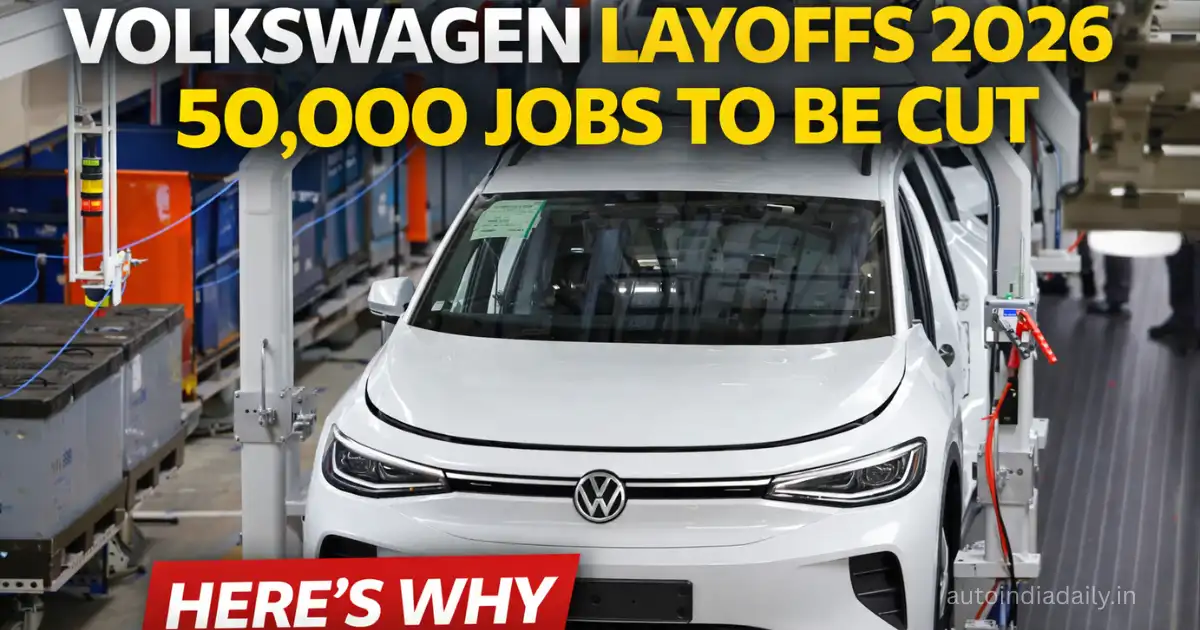
The global auto industry is going through one of its biggest transitions in decades, driven by electrification, geopolitical tensions and changing consumer demand. Against this backdrop, the Volkswagen layoffs 2026 announcement has drawn attention worldwide, with the German automaker planning to reduce around 50,000 jobs by the end of the decade.
Volkswagen Group, Europe’s largest car manufacturer, said the decision is part of a broader restructuring strategy as the company faces declining sales in key markets, rising costs and increasing global economic uncertainty.
Also Read: Volkswagen Discounts March 2026: Taigun, Virtus & Tiguan R-Line Get Up To Rs 4.5 Lakh Off
Volkswagen Layoffs 2026- Why VW Is Planning Large Job Cuts
Volkswagen has indicated that the workforce reduction is necessary to improve efficiency and adapt to the evolving automotive landscape.
The company recently reported a 54 percent decline in pre-tax profits, which fell to around €8.9 billion. This sharp drop reflects multiple challenges, including weaker demand in major markets and higher operating costs linked to technological transformation.
According to the company, the planned job cuts will mainly affect Germany, where many of its production facilities and corporate operations are located. The layoffs will also impact various brands within the Volkswagen Group, which includes Audi, Porsche, Skoda, Seat and Lamborghini.
Many of these reductions are expected to occur through natural attrition, such as retirements or employees leaving voluntarily, rather than immediate large-scale layoffs.
Falling Sales In China And North America
One of the biggest pressures on Volkswagen has been the decline in its market share in China, the world’s largest automobile market.
Chinese domestic manufacturers have been gaining ground rapidly, especially in the electric vehicle (EV) segment. Local brands are offering competitively priced EVs with advanced technology, making it harder for foreign automakers like Volkswagen to maintain their dominance.
At the same time, sales in North America have also been affected by trade policies and tariffs. The company has pointed to punitive US tariffs introduced under former President Donald Trump as a factor impacting profitability in the region.
Together, these developments have forced Volkswagen to rethink its long-term cost structure and investment strategy.
EV Transition Creating Financial Pressure
Another major factor behind the restructuring is the industry’s ongoing transition toward electric mobility.
Volkswagen has been investing heavily in EV technology, battery development and software platforms. However, global EV demand has not grown as quickly as some manufacturers expected.
The company has already scaled back certain EV production targets in recent months. Even Porsche, one of Volkswagen Group’s most profitable brands, has slowed its shift toward full electrification due to softer demand in some markets.
Balancing investments in electric vehicles while still supporting internal combustion engine models has increased operational complexity and costs.
Global Uncertainty Adding More Pressure
Volkswagen also warned that broader geopolitical and economic tensions could affect demand in the coming years.
The company pointed to international trade restrictions, rising energy prices and geopolitical conflicts as factors creating uncertainty in the global automotive market.
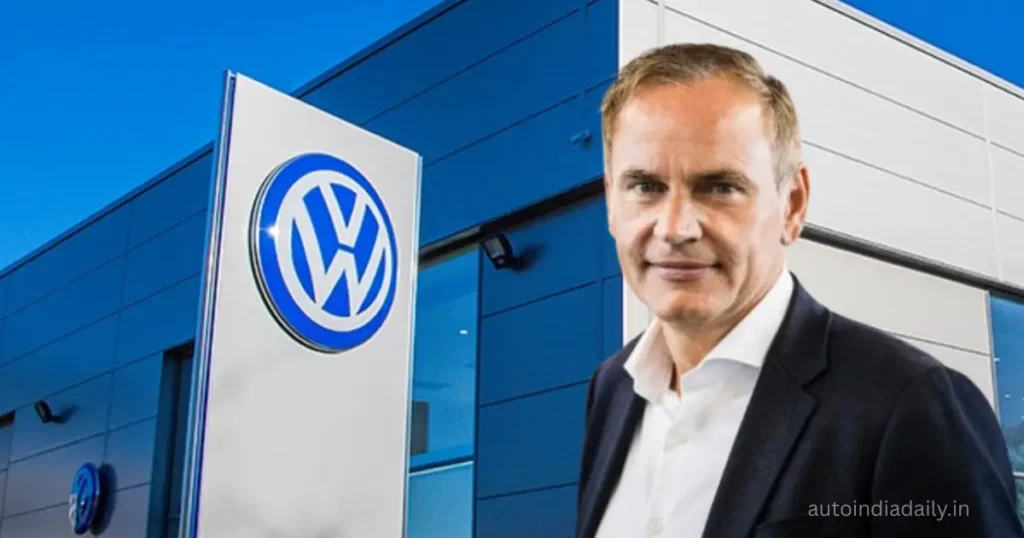
According to Volkswagen Group CEO Oliver Blume, recent geopolitical developments could affect demand for premium brands such as Audi and Porsche, particularly in regions where margins are high but sales volumes are relatively small.
Such volatility has made long-term planning more difficult for automakers operating across multiple markets.
Also Read: Volkswagen Taigun Facelift 2026 Spotted Almost Undisguised, Launch Likely Soon
What This Means For The Global Auto Industry
The Volkswagen Layoffs 2026 plan highlights how even the world’s largest automakers are facing structural challenges.
The industry is simultaneously dealing with several major transformations:
- Transition from petrol and diesel vehicles to electric cars
- Rising competition from new EV-focused companies
- Increasing software integration in vehicles
- Higher development costs for next-generation technologies
Manufacturers are therefore under pressure to reduce costs while investing in future technologies, leading many companies to streamline operations.
Impact On India And Emerging Markets
While the job cuts are primarily focused on Europe, the broader strategy could still influence markets like India.
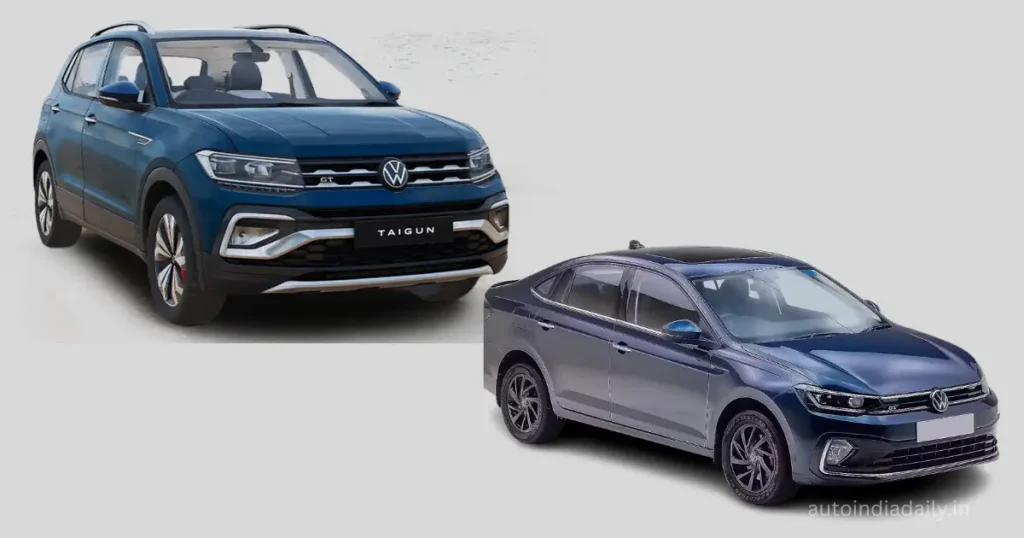
Volkswagen has been strengthening its presence in India with models such as the Taigun and Virtus, developed under its India-focused MQB A0-IN platform strategy. Cost optimisation and global restructuring could encourage the company to rely more on regional manufacturing hubs like India for future growth.
At the same time, increased global competition and shifting investments may also shape Volkswagen’s long-term product strategy in emerging markets.
Conclusion
The Volkswagen layoffs 2026 plan, involving up to 50,000 job reductions by 2030, reflects the profound changes underway in the automotive industry. Declining profits, rising EV investments, geopolitical tensions and stronger competition in key markets have forced the company to restructure its operations.
While the immediate impact will be felt mainly in Europe, the move illustrates how automakers worldwide are adapting to a rapidly changing global market. For buyers and industry observers alike, it signals a period of transformation as manufacturers balance cost control with investments in future mobility technologies.
Disclaimer: This article is based on publicly available reports and company statements. Details related to job cuts and restructuring plans may evolve as Volkswagen continues to update its global strategy.
Also Read: Next-Gen Volkswagen Golf Teaser Revealed, Electric Golf Coming In 2028

Raj Prajapati is a Senior Automotive Content Writer at AutoIndiaDaily. A B.Tech graduate in Computer Science and Engineering, he has over four years of experience covering car and bike launches, EV updates, price changes, and key developments in the Indian automobile industry.